

This is the future of hiring: the cover letter didn’t die the signal did.
What AI has really changed about hiring and why the next generation of companies will be built on conversations, not documents.
Fast Company’s recent article argues that the cover letter is officially dead, and I think they’re right. Once generative AI made it possible to produce a thoughtful, personalized cover letter in less than a minute, its value as a hiring signal began to disappear. If everyone can create something that looks exceptional with the same tools, then exceptional is no longer exceptional. The cover letter didn’t fail because people stopped writing them. It failed because AI made authenticity impossible to distinguish from optimization.
But I believe the bigger story isn’t about the death of the cover letter. It’s about the collapse of almost every traditional hiring signal we’ve relied on for decades.
Hiring has always been an exercise in making important decisions with incomplete information. Companies look at resumes to understand experience, interviews to judge communication, references to reduce risk, and personality assessments to add another layer of confidence. None of these methods were perfect, but together they created a picture that felt good enough to make a decision. Today, that picture is becoming increasingly unreliable—not because candidates are less capable, but because AI has dramatically lowered the cost of appearing capable.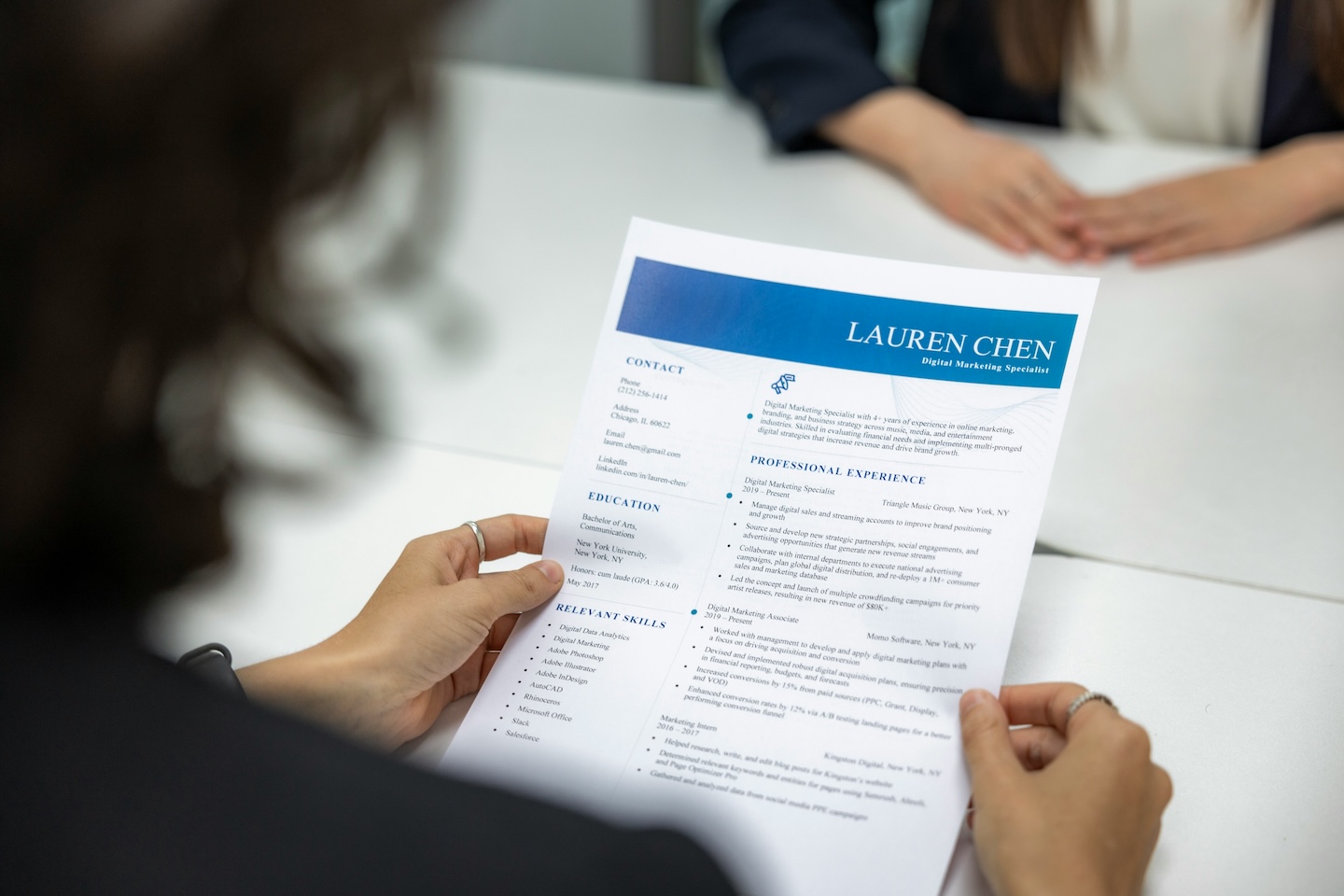
A resume can now be rewritten dozens of times until it perfectly matches a job description. A cover letter can be generated in seconds. Interview answers can be rehearsed with AI until they sound polished and persuasive. Even recruiters are now using AI to filter applications before another human ever reads them. Both sides are optimizing for machines, while the human being at the center of the process becomes harder to understand.
That is the paradox AI has created. We have more information than ever before, yet less confidence in what any of it actually tells us.
For years we’ve mistaken documents for people. A resume tells us where someone has worked. A cover letter tells us what they want us to believe. An interview often rewards the person who prepared best rather than the one who will perform best. These were never direct measures of potential; they were simply the best proxies we had. AI hasn’t broken hiring, it has exposed how dependent hiring has always been on proxies.
The next generation of hiring won’t be built on finding better documents. It will be built on finding better signals.
The cover letter didn’t fail, the signal did
I believe those signals live inside conversations.
Not interviews designed to confirm a resume, but genuine conversations that reveal how people think, communicate, solve problems, respond to uncertainty, an

d explain their decisions. Those behaviors are remarkably difficult to fabricate over the course of a natural conversation. Someone can memorize perfect answers, but it is much harder to consistently demonstrate curiosity, self-awareness, resilience, empathy, or structured thinking when the conversation moves in unexpected directions.
This is one of the reasons we started building Teracrowd.
Our belief was never that companies needed another screening tool or another assessment platform. The market has plenty of those already. We believed companies needed a way to understand people before making decisions that affect teams, customers, and ultimately the trajectory of the business itself.
Every Traditional Hiring Signal Is Collapsing
Every conversation contains behavioral intelligence. It reveals patterns that rarely appear on a resume and cannot be summarized by a personality score. The question is no longer whether AI should participate in hiring. It already does. The more important question is whether AI can help us move closer to understanding the human being behind the application instead of simply producing better applications.
That distinction matters because hiring is only the beginning. The same understanding that helps a company decide who to hire also helps it understand who should be coached, who is ready to lead, who may be quietly disengaging, and who has untapped potential that no one has recognized. Once companies begin treating conversations as a source of workforce intelligence rather than just a hiring exercise, the conversation itself becomes one of the most valuable assets an organization can have.
The cover letter may indeed be dead, but what replaces it shouldn’t be another document or another automated filter. It should be something much more human. AI has made it incredibly easy to manufacture polished applications. It has also made it more important than ever to understand the person behind them.
The companies that win over the next decade won’t simply hire faster. They’ll make better people decisions because they’ll stop optimizing for paperwork and start listening for the signals that documents can never capture.
The cover letter didn’t really die. Our old definition of evidence did.
The Future of Hiring: FAQ
Q1. Is the cover letter dead? As a hiring signal, effectively yes. Once generative AI could produce a polished, personalized cover letter in under a minute, it stopped telling you anything real about the person. The cover letter didn’t fail because people stopped writing them — it failed because AI made authenticity impossible to distinguish from optimization.
Q2. Why are traditional hiring signals failing? Because AI has dramatically lowered the cost of appearing capable. Resumes, cover letters, and rehearsed interview answers can now be optimized in seconds, so the proxies hiring has leaned on for decades no longer separate a strong candidate from a well-optimized application. The signals didn’t get worse — faking them got easier.
Q3. What is the future of hiring built on? On signals that are hard to fabricate: genuine conversations that reveal how a person actually thinks, communicates, solves problems, and responds to uncertainty. Someone can memorize perfect answers, but curiosity, self-awareness, resilience, and structured thinking are difficult to fake when a conversation moves in unexpected directions. That behavioral signal is what Teracrowd is built to capture.