It’s AI Helping Humans Understand Humans.
Every technological revolution arrives carrying both hope and fear. We celebrate the possibilities while quietly worrying about what might be lost. The printing press threatened scribes. The industrial revolution threatened craftsmen. The personal computer threatened entire administrative functions. Today, artificial intelligence has become the latest object of both fascination and anxiety.
The dominant narrative suggests we are headed toward a showdown between humans and machines. Every week seems to bring a new prediction about which professions will disappear, which skills will become obsolete, and how quickly organizations will need to adapt. The conversation has become framed as a competition: AI versus people.
I suspect we’re asking the wrong question.
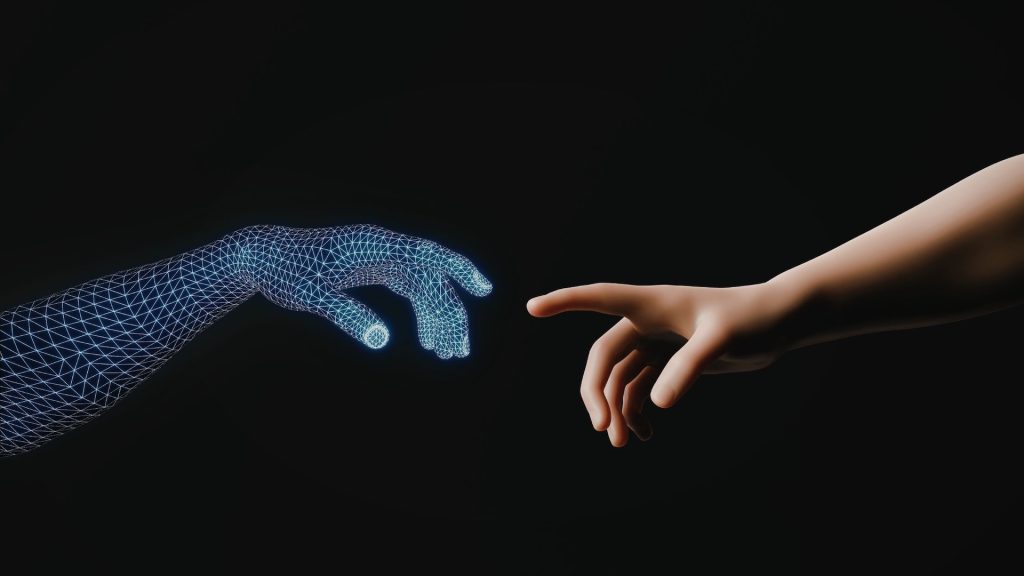
The most interesting future isn’t one where AI replaces humans. It is one where AI helps humans understand other humans more deeply than we ever have before.
For decades, organizations have invested heavily in understanding almost everything except the people who make them work. We measure revenue with precision. We monitor customer acquisition costs down to the decimal point. We optimize supply chains, forecast inventory, and build dashboards for every operational metric imaginable.
Yet when it comes to talent, many of the systems we rely on would feel familiar to a hiring manager from decades ago.
A resume still acts as the front door to opportunity. Interviews often depend on the experience, energy, and instincts of whichever manager happens to be conducting them that day. Performance reviews frequently become annual rituals that attempt to summarize an entire year’s worth of contribution in a handful of ratings and comments.
These systems weren’t created because organizations lacked ambition. They emerged because there simply wasn’t a practical alternative. Time was limited. Information was scarce. Standardization offered efficiency.
The problem is that work has evolved faster than our methods for understanding the people doing it.
The capabilities that increasingly define success in modern organizations are difficult to capture through traditional tools. Adaptability matters more than certainty. Judgment matters more than memorization. The ability to learn, collaborate, navigate ambiguity, and communicate across disciplines often determines whether someone thrives.
Those qualities rarely fit neatly into a resume.
Two candidates can possess nearly identical credentials and perform entirely differently once they step into the realities of a role. One brings curiosity and resilience into every challenge. The other struggles when circumstances change. One elevates the people around them. The other quietly erodes trust despite checking every box on paper.
The challenge is that many of these differences only become visible after the hiring decision has already been made.
This is where I believe AI presents an extraordinary opportunity—not because it removes people from the process, but because it allows us to pay attention to dimensions of human potential that have historically been difficult to see.
The most powerful use of AI is not replacing judgment. It is enriching it.
Instead of forcing managers to spend hours filtering through documents, technology can create space for deeper understanding. Instead of relying exclusively on static summaries of past experiences, organizations can observe how people think, communicate, and reason through situations that resemble the work itself.
Rather than reducing humans to scores, the goal becomes surfacing stronger signals that help humans make more informed decisions.
What changes when understanding becomes the objective
Organizations that approach AI as a tool for human understanding begin to operate differently.
- Every person gets the opportunity to be heard, rather than filtered out by how well they write about themselves.
- Standards become more consistent across teams and locations, reducing the variability that often shapes hiring outcomes.
- Managers spend less time on administrative screening and more time exercising the judgment only they can provide.
- Potential becomes easier to recognize, especially in people whose strengths may not fit conventional definitions of talent.
- Decisions are supported by richer signals, without surrendering accountability to algorithms.
What excites me most is that this shift arrives precisely when work itself is becoming more human.
As AI takes on repetitive and transactional tasks, people are increasingly moving toward roles that require interpretation, creativity, coordination, empathy, and discernment. We are being asked to operate at a higher level of abstraction. Success depends less on executing predictable routines and more on navigating uncertainty alongside other people.
In that environment, understanding humans becomes a strategic advantage.
The organizations that thrive will not necessarily be those that adopt AI the fastest. They will be the ones that use it most thoughtfully. They will use it to uncover hidden potential before it walks out the door. To hire beyond familiarity and pedigree. To develop people before disengagement turns into resignation.
Most importantly, they will remember that technology is at its best when it expands our humanity rather than diminishes it.
The future of work is not a contest between artificial intelligence and human intelligence.
It is an opportunity to build systems that finally help us see one another more clearly.
For all of AI’s remarkable capabilities, it cannot carry responsibility for the decisions that shape people’s lives and careers. That remains our work.
But if technology can help us listen more carefully, understand more deeply, and recognize potential more fairly than we have in the past, then perhaps this next chapter will not be defined by what machines replace.
It will be defined by how they help us become better judges of human possibility.