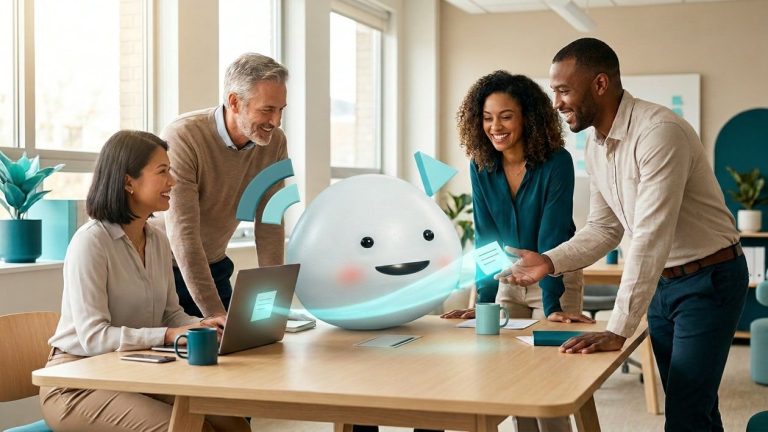
We talk a lot about what AI can do. How quickly it can write, analyze, automate, research, and produce work that once required hours of human effort. Companies are investing in new tools, experimenting with different workflows, and trying to understand how much more they can accomplish with AI. But while much of the conversation focuses on productivity and efficiency, there is another side to this transformation that deserves equal attention: how people are experiencing the change.
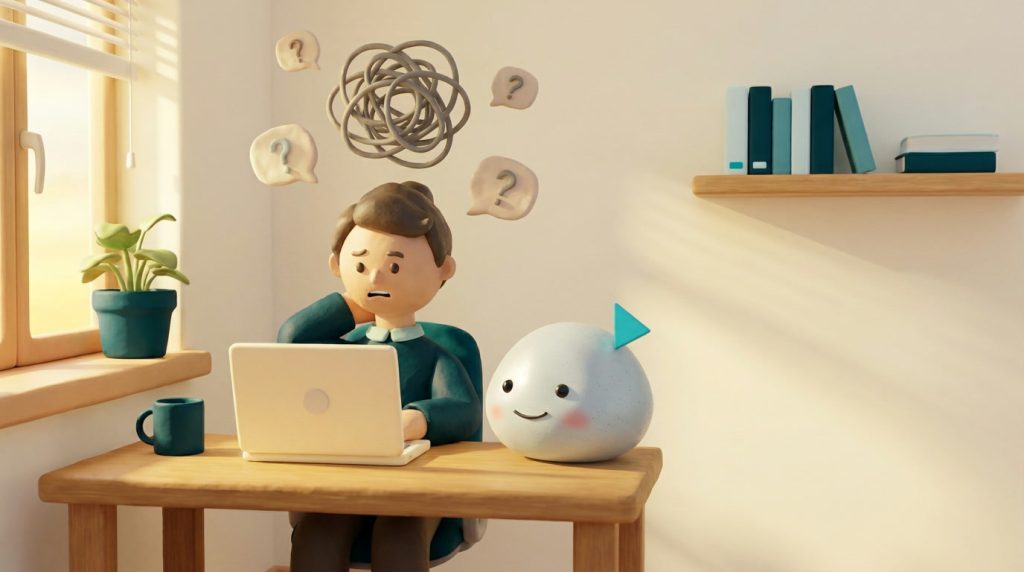
Across organizations, employees are questioning what AI will mean for their jobs, whether the skills they have spent years developing will remain relevant, and how they are expected to keep up with a technology that seems to evolve every week. Some are excited by the possibilities but uncertain about their place in the future workplace. Others feel pressure to adopt tools they don’t fully understand, often without enough time, training, or context to see how those tools will actually help them.
This is what I would describe as AI anxiety at work, and I believe it will become one of the defining human challenges of the next phase of AI adoption. The biggest mistake companies can make is treating AI as a technology project alone. Introducing software, automating processes, and training people to use new tools are only part of the equation. The harder work is helping people understand what the change means for them, where they fit, and how they can grow alongside it. The future of AI at work will depend not only on how advanced the technology becomes, but also on how effectively organizations bring their people along.
What Is AI Anxiety at Work?
 AI anxiety is the uncertainty, stress, or concern people experience as artificial intelligence changes the nature of their work. It can come from the fear of job displacement, pressure to learn new skills, concerns about being evaluated by automated systems, or simply not knowing what the future of a particular role or profession will look like.
These concerns aren’t always visible. An employee may continue performing well while privately wondering whether the work they do today will still be needed in a few years. A manager may encourage AI adoption while feeling uncertain about how to lead a team whose responsibilities are changing. Someone may recognize the opportunities AI creates but still feel uncomfortable with the speed and scale of the transformation.
We need to make an important distinction between resisting technology and being concerned about the consequences of change. People can recognize the potential of AI and still have legitimate questions about their future. Telling employees that AI will make everything easier doesn’t address concerns about job security, changing expectations, or the value of their experience. Those questions require honest conversations, not another announcement about a new platform or productivity target.
Why AI Is Creating Anxiety in the Workplace
AI is different from many previous workplace technologies because it can influence activities that were traditionally considered human work. It can generate content, analyze information, support decisions, communicate with customers, and increasingly manage complex workflows. As these capabilities expand, uncertainty reaches beyond individual tasks and begins to affect how people think about their roles, careers, and professional value.
There are several reasons this is happening:
Job security and changing roles. People naturally wonder whether tasks they currently perform will be automated and what that means for their position. Even when a company has no immediate plans to eliminate roles, the possibility of significant change can create anxiety. Employees want to understand whether AI will support their work, fundamentally change it, or eventually make parts of their role unnecessary.
The pressure to keep up. New AI tools and capabilities appear constantly, creating an expectation that employees should learn and adapt almost immediately. But people are already managing their responsibilities, deadlines, customers, and teams. Not everyone has equal access to training, time, or confidence to experiment, and organizations should not assume that simply making a tool available means everyone knows how to use it effectively.
The value of human experience. When AI can perform tasks that once required specialist knowledge, people may begin questioning what makes their contribution valuable. This can be particularly difficult for employees who have spent years building expertise in areas where technology is now becoming increasingly capable. The challenge for organizations is to show how experience, judgment, creativity, and contextual understanding can become even more valuable when combined with AI.
Trust and control. Employees may not know how their work is being used by AI systems, what information is being collected, or whether automated outputs will influence decisions about their performance. Without clear boundaries and transparency, uncertainty can quickly turn into mistrust. People need to understand not only what the technology does, but also how it affects them and what safeguards are in place.
These concerns are not simply obstacles to technology adoption. They are signals that organizations need to pay closer attention to the people experiencing the change.
The Problem With Introducing AI Without Bringing People Along
Many organizations approach AI adoption from the top down. Leadership identifies the tools, departments receive instructions, employees attend training sessions, and everyone is expected to start using the technology. On paper, the implementation may look successful, but introducing a tool doesn’t automatically change how people work or make them feel confident about the future.
An employee may not understand why a new system is being introduced or how it will affect their responsibilities. A manager may not know how to explain what the technology means for the team’s priorities. Someone with years of experience may feel that the knowledge they have built is suddenly being undervalued because a machine can now complete certain tasks faster.
When those questions go unanswered, resistance is predictable. People may avoid the tools, use them without understanding their limitations, or simply go through the motions because they believe that is what the organization expects. In many cases, the issue isn’t that people are against AI. They are reacting to uncertainty, poor communication, and change that happens to them rather than with them.
You cannot build an AI-ready organization by making people feel like they are the problem that technology is supposed to solve. If companies want employees to embrace AI, they need to involve them in the process, explain the reasons behind the changes, and create an environment where people can learn without feeling that every question or mistake puts them behind.
From Replacing People to Elevating What People Can Do
I believe we need to change the conversation from how many tasks AI can replace to how much more capable people can become when they have the right support. AI can help someone research faster, understand complex information, explore new ideas, and reduce repetitive work. It can give a small team access to capabilities that previously required significantly more resources, while helping individuals develop skills and contribute in areas they might not have considered before.
The real value comes when technology complements human strengths rather than treating them as interchangeable. Experience, judgment, empathy, creativity, relationships, and the ability to understand context remain essential. AI can generate options, but people need to decide which options make sense for a particular situation. It can summarize information, but people still need to understand the circumstances behind it. It can help produce an answer, but knowing whether that answer is right, appropriate, and useful requires human judgment.
This is why I don’t see the future as AI versus humans. I see an opportunity to rethink how human intelligence and artificial intelligence work together. The organizations that understand this will have a very different conversation with their employees. Instead of asking how to make people compete with AI, they will ask how to help people become more capable with it, and how to create new opportunities for people to contribute as the nature of work evolves.
How Organizations Can Reduce AI Anxiety
Reducing AI anxiety doesn’t mean promising that nothing will change. Roles, processes, and expectations will evolve, and pretending otherwise only damages trust. What organizations can do is make that change more understandable, inclusive, and manageable by giving people a meaningful role in shaping how AI becomes part of their work.
Here are five practical ways leaders can start:
- Be transparent about what is changing. Explain why AI is being introduced, which processes may change, and what is still uncertain. Don’t make promises the organization cannot guarantee or present every implementation as an immediate success. People are more likely to trust an honest conversation about opportunities and risks than a polished announcement that avoids difficult questions.
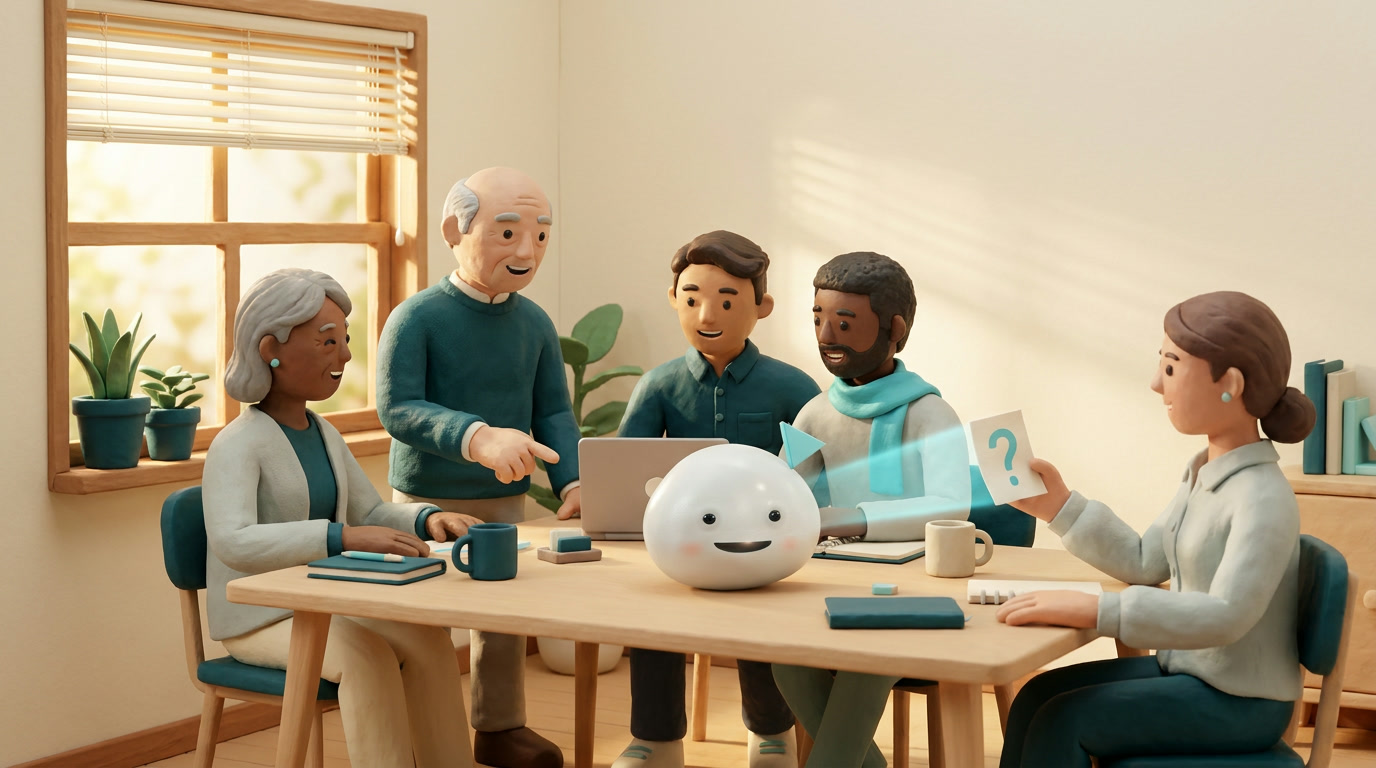
- Involve employees in the process. Ask the people doing the work where AI could help, what creates unnecessary friction, and what concerns they have. Employees often understand the practical opportunities and risks better than anyone designing the implementation because they experience the processes every day. Their input can help organizations avoid introducing technology that looks impressive but doesn’t solve the problems people actually face.
- Make learning part of the work. Give people time and space to experiment, share discoveries, and build new skills. AI education should go beyond showing employees which buttons to press. It should help them understand the technology’s capabilities, limitations, and appropriate use, while giving them the confidence to question its outputs and make informed decisions.
- Recognize the value of human contribution. As AI takes on more tasks, organizations need to be clear about the human capabilities that matter: judgment, creativity, problem-solving, collaboration, relationships, and accountability. Employees should be able to see how their experience can become more valuable in an AI-supported workplace, rather than focusing only on which parts of their work technology might replace.
- Create room for questions and feedback. Not everyone will adapt at the same pace, and people will have different concerns depending on their role, experience, and access to technology. Give employees ways to raise questions, share what is working, and ask for support without feeling that they are falling behind. Confidence grows when people feel heard and involved in the process.
None of these actions will eliminate uncertainty, but together they can help organizations build the trust and confidence needed to navigate change. AI adoption should be an ongoing conversation with employees, not a one-time rollout followed by an expectation that everyone will simply adapt.
The Missing Ingredient Is Collective Intelligence
One of the things I’ve learned through years of working in crowdsourcing and collaborative innovation is that people are far more willing to contribute when they have a voice in the process. The same principle applies to AI adoption. Employees should be involved in identifying where AI can genuinely help, which processes create unnecessary friction, and what skills the organization needs to develop. The people doing the work often understand the problems better than anyone designing the implementation.
This is also where collective intelligence becomes important. One department may discover an effective way to use AI, while another is struggling with the same challenge. Someone may have found a way to save hours every week, but that knowledge never reaches colleagues who could benefit from it. A team member may have a concern about how a new system works, but there is no clear channel to raise it or connect with someone who can help.
Organizations need better ways to surface these experiences and connect people who can learn from one another. Rather than relying on a handful of leaders or specialists to define the entire AI strategy, companies can learn from the people experimenting with the technology every day. Crowdsourcing has shown us that valuable solutions can come from beyond the traditional decision-making hierarchy. We should apply that same thinking inside organizations, because the next great idea for using AI may already exist within the company. The challenge is connecting it to the people who need it.
The New Role of Managers in an AI-Driven Workplace
Managers will play an important role in reducing AI anxiety, but their responsibility isn’t simply to encourage employees to use new tools or measure how quickly they adopt them. It is to create an environment where people can ask questions, experiment, make mistakes, and understand how their roles may evolve. That means having honest conversations about changing responsibilities, investing in learning, recognizing new contributions, and making it clear where human judgment remains essential.
It also means understanding that different people need different kinds of support. Some employees may be enthusiastic and ready to experiment, while others may need more time, guidance, or reassurance before they feel comfortable. Treating everyone as if they have the same level of confidence or readiness is unlikely to work. Managers don’t need to have every answer about the future of AI, but they do need to create the conditions for their teams to navigate that future together.
This is one reason I believe the AI Chief of Staff for Teams is an important evolution. As I explored in How an AI Chief of Staff Helps Teams Work Better, AI can help maintain context, identify blockers, connect people with relevant knowledge, and give managers a clearer understanding of where support is needed. Those capabilities can also help organizations understand where people are struggling with change, what questions keep coming up, and where additional guidance may be useful.
The objective isn’t to monitor employees or turn their conversations into performance scores. It is to create better opportunities for people to be heard and supported. At Teracrowd, this is part of what we’re exploring with Tera, our AI Chief of Staff for teams. We believe technology should strengthen the connection between people and their work, helping teams share knowledge and move forward together rather than creating another layer of pressure or control.
The Future Belongs to Organizations That Bring People Along
I’ve spent much of my career exploring what happens when people connect their knowledge, experience, and ideas around a shared goal. Through crowdsourcing, community building, and collaborative innovation, I’ve seen ordinary people do extraordinary things when the right conditions are in place. I believe the same potential exists inside every organization. There is knowledge that hasn’t been shared, experience that hasn’t reached the right person, and talent that could contribute much more if the barriers between people were lower.
Companies don’t become future-ready simply because they have access to the latest technology. They become future-ready when their people understand how to use it, feel confident contributing to its evolution, and have the opportunity to grow alongside it. AI anxiety won’t disappear because companies introduce more tools or send employees to another training session. It begins to change when people feel informed, involved, supported, and valued throughout the process.
We should be building workplaces where AI expands what people can do, where experience is strengthened rather than dismissed, and where technology creates more opportunities for people to contribute. The question isn’t whether AI will change the way we work. It already is. The question is whether we will use this moment to build organizations that are more human, more collaborative, and more intelligent than before.
Because the real competitive advantage won’t come from having AI alone. It will come from knowing how to unlock the potential of people working alongside it.